
Table of Contents
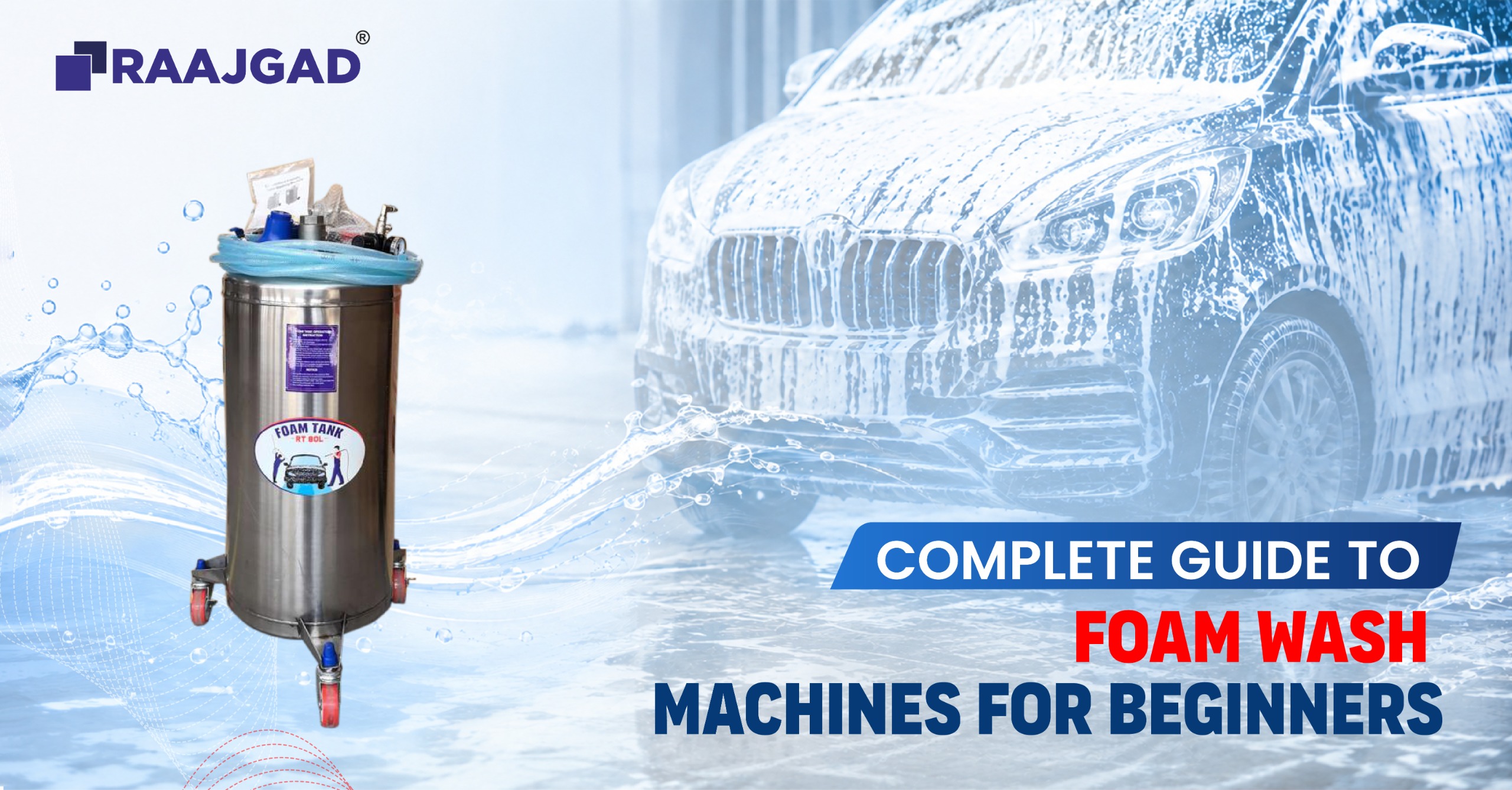
ToggleHave you ever seen the car submerged in layers upon layers of white foam before it was washed? That’s the foam wash machine at work. It’s become one of the most sought-after modifications for home car washes, and there’s a reason for that – a foam wash machine is quick, safe, and simply fun to use.
In this guide, you’ll learn all the things you need to know about it, such as what exactly is a foam wash machine, how it functions, which kind to purchase, how to use it step-by-step, and all the mistakes you will inevitably make the first time.
What Is a Foam Wash Machine?
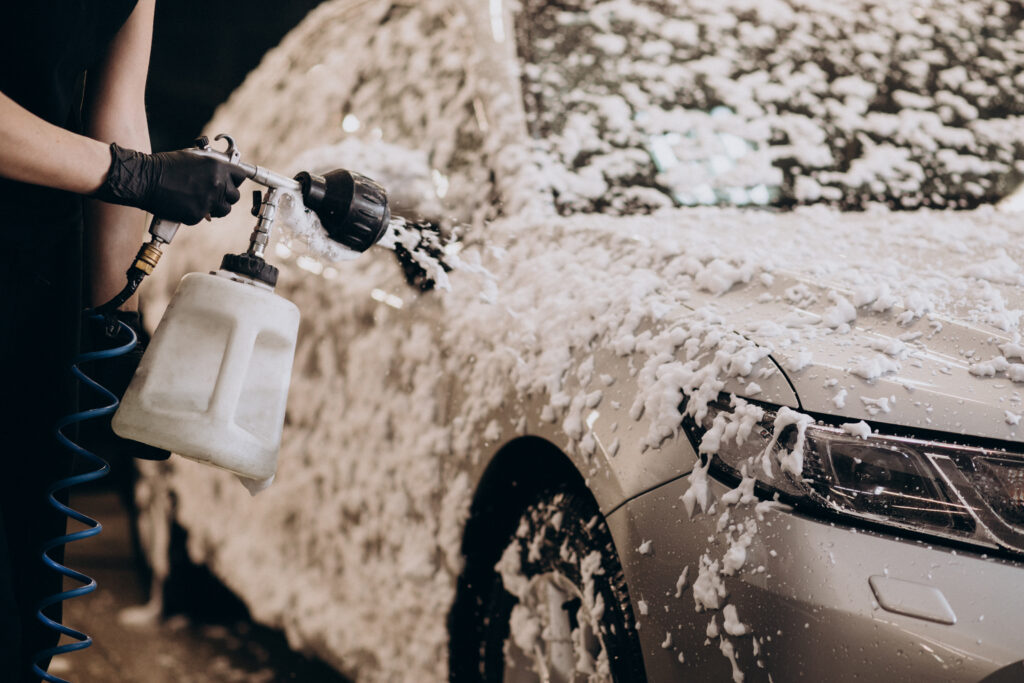
Foam wash machines are washing machines that incorporate car shampoo with water and air in order to create a rich and sticky foam that gets sprayed over the surface of a car. Rather than spraying on the car a runny mixture of water and soap, the foam adheres to the paint of the vehicle for several minutes, cleaning the dust and grime from the surface without touching it at all.
This is a crucial step since most people do not understand its importance. The main culprit of the scratches and swirls left on the paint of a car is using the dirty wash mitt.
There are two main categories of foam wash machines:
- Foam cannons – Attach to a pressure washer and use its water pressure and flow to atomize soap into rich, thick foam.
- Foam guns – Attach directly to a garden hose. They use standard household water pressure, so the foam is usually a bit thinner but still effective.
How Does a Foam Wash Machine Work?
In the barrel of the gun, water is pumped through a compartment containing concentrated soap solution. In doing so, it pulls out the soap via a tiny tube (Venturi effect), whereupon the mixture of air occurs, producing foam instead of just soap and water.
A few variables control how thick or thin the foam comes out:
- Water pressure and flow rate – Higher pressure from a pressure washer generally produces denser, longer-lasting foam than a garden hose.
- Dilution ratio – The dial or knob on the cannon controls how much soap concentrate mixes into the water stream.
- Soap formula – Not every car shampoo is designed to foam. Products labeled specifically for foam cannons or foam guns contain foam-boosting surfactants that regular shampoo lacks.
- Nozzle setting – A wide fan pattern typically spreads foam more evenly across large panels than a narrow, concentrated stream.
Foam Cannon vs. Foam Gun: Which Should Beginners Buy?
| Feature | Foam Cannon | Foam Gun |
|---|---|---|
| Power source | Pressure washer | Garden hose |
| Foam thickness | Thick, cling-heavy foam | Lighter, thinner foam |
| Upfront cost | Higher (needs a pressure washer too) | Lower, often an all-in-one bottle |
| Best for | Frequent detailers, larger vehicles | Casual washers, apartment/no-pressure-washer setups |
| Setup time | Slightly more involved | Quick, plug-and-spray |
For those who already own a pressure washer, then adding a foam cannon makes sense, since the denser foam stays on surfaces longer and does the majority of the cleaning. If you do not own or intend to own a pressure washer, then at the very least, you can invest in a hose-end foam gun.
What You Need Before Your First Foam Wash
A foam wash machine is only one part of a full wash system. Before you start, gather:
- Foam cannon or foam gun
- High Pressure washer (if using a cannon) or a garden hose with decent flow
- A pH-balanced car wash shampoo made for foam machines
- Two wash buckets (one for clean rinse water, one for soapy water) with grit guards
- A soft microfiber or chenille wash mitt
- Microfiber drying towels
- A wheel cleaner and separate wheel brush (optional but recommended)
Step by Step: Using a Foam Wash Machine
1. Make the Soap Solution in Correct Proportions
First, check the label of your soap, which contains instructions about the correct ratio of foam, normally it ranges from 1:10 to 1:20 (soap and water). Start with the lower ratios because you may always increase proportion.
2. Install the Foam Cannon or Gun
Connect foam cannon to the pressure washer wand or the gun to the hose with an appropriate and tight fitting.
3. Spray a Test Pass Before Car
Before washing a car, test your spray pattern on the driveway or lawn. Make sure that the foam is dense enough, sprays evenly and doesn’t slide down right after application.
4. Pre-rinse the Entire Car
First, rinse the car completely without any soap, this will help you remove loose dirt from the surface and thus reduce the amount of the cleaning product needed.
5. Apply Foam
Spray foam from top of the vehicle and proceed downwards using a wide and fan-shaped spray, cover the car completely, being especially careful with the bottom parts of the body, where most dirt is located.
6. Let It Sit But Not too Long
Let the foam settle on the car for 3-5 minutes to dissolve dirt and grime. But don’t let the foam to stay too long in order not to burn it and create stains on the car.
7. Two-Bucket Method Hand Washing
Take a mitt and dip it in the soapy bucket, wash the area, rinse the mitt in the bucket with clean water and repeat procedure.
8. Rinse Downward
Start rinsing the foam and soapy water from the top part of the car to avoid moving dirty water again on clean surfaces.
9. Use Microfiber Towels for Drying Immediately.
Dry immediately to avoid water spots, especially in hard water areas.
Common Foam Wash Machine Mistakes Beginners Make
- Using dish soap or generic household cleaners. These aren’t pH-balanced for automotive clear coat and can strip wax or sealant over time. Stick to a dedicated car shampoo.
- Washing in direct sunlight or on a hot surface. Foam and soap dry too fast on hot panels, which can leave marks instead of a clean finish.
- Skipping the pre-rinse. Applying foam straight onto a dirty, dry car makes the foam work harder than it needs to.
- Ignoring dilution ratios. Too much soap creates dense foam that’s hard to rinse fully; too little runs off before it can loosen anything.
- Not flushing the machine after use. Dried soap residue inside the cannon or gun is one of the most common reasons foam machines lose their foaming power. Rinse the bottle and lines with clean water after every wash.
- Assuming any pressure washer will work. Foam cannons generally need enough PSI and flow rate to atomize the soap properly — check the compatibility details before buying.
Choosing the Right Soap for a Foam Wash Machine
All car shampoo does not foam the same way. It’s best to look for shampoos that are meant specifically for foam cannons and foam guns because they contain the additional surfactants required to produce foam. You can go wrong with a pH-balanced shampoo or one that claims to enhance gloss or ceramic-safe. However, it’s always wise to test any new shampoo on a test panel first.
Maintaining Your Foam Wash Machine
A little maintenance keeps a foam cannon or gun working like new:
- Rinse the bottle, tube, and nozzle with clean water after every use.
- Store it somewhere it won’t freeze if you’re in a cold climate — trapped water can crack fittings.
- Periodically check the o-rings and seals for wear, since a worn seal is a common cause of leaks.
- Replace the nozzle if the spray pattern becomes uneven or weak, since mineral buildup or wear can distort it over time.
Frequently Asked Questions
- Is a pressure washer necessary for a foam wash machine?
No, you do not have to use one because foam guns hook up to a garden hose, while foam cannons use a pressure washer in order to create thick foam. - How frequently do I foam wash my car?
The majority of people do it weekly or bi-weekly, according to the amount of dirt, road salt, and pollen their cars pick up. - Can I use regular dish soap in a foam wash machine?
No, because it won’t be pH balanced for your vehicle’s clear coat and will remove wax, sealants or ceramic coating if used frequently. - Why is my foam thin and not thick?
If your foam is thin, there might be low water pressure, an incorrect dilution rate, soap which doesn’t specialize in foam cannons, or a clogged nozzle.
Dattatray Daswadkar
Director, Sales & Marketing - Raajgad Techno Services Pvt. Ltd. Dattatray Daswadkar leads the Sales & Marketing operations at Raajgad Techno Services Pvt. Ltd., playing a key role in building the company’s strong presence across the pump industry. With deep expertise in customer relations and technical solutions, he has helped position Raajgad Techno as a trusted partner for major municipal and industrial clients. Under his leadership, the company is expanding rapidly across India — introducing new models, advanced features, and placing greater emphasis on after-sales support. As BIS norms evolve, Dattatray ensures that Raajgad stays ahead by aligning all products with upcoming standards and certifications.