
Table of Contents
ToggleWashing a car at home can be a time-consuming job, especially when you have to carry buckets of water, use a cloth to remove dirt and then rinse the vehicle several times. A portable car washer offers a more convenient way to handle regular vehicle cleaning without depending entirely on a traditional bucket-and-cloth method.
Portable car washers are becoming increasingly popular among car owners, bike owners, home users and even small vehicle cleaning businesses. Their compact design makes them easier to move, while the pressurized water helps remove dust, mud, road grime and other dirt from the vehicle surface.
But what exactly is a portable car washer? How does it work? Is it suitable for washing cars and bikes? And what should you check before buying one?
Let’s understand everything you need to know.
What Is a Portable Car Washer?
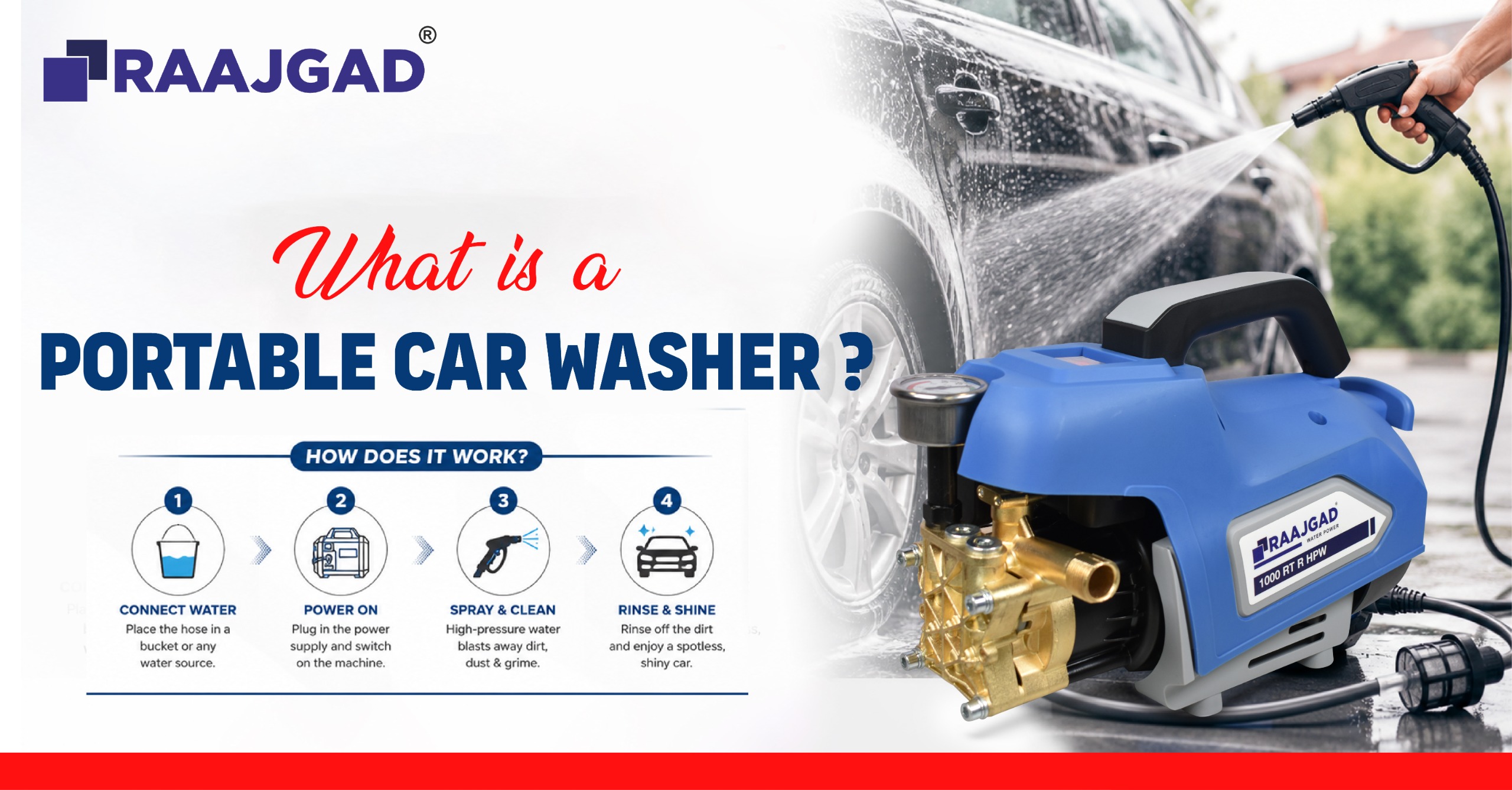
A portable car washer is a compact washing machine designed to deliver pressurized water for cleaning vehicles and other surfaces.
Unlike a traditional garden hose, a portable washer uses a pump to increase the pressure of the water. The pressurized water is then delivered through a hose and spray gun or nozzle.
Because the equipment is designed to be moved easily, it can be useful in locations where a fixed car washing setup is not available.
Depending on the model, a portable car washer may include:
Electric motor or pump
Water inlet
High-pressure hose
Spray gun
Different spray nozzles
Water container or tank
Power cable or battery
Wheels or carrying handle
The exact configuration varies from one machine to another, so it is important to check the manufacturer’s specifications before purchasing.
How Does a Portable Car Washer Work?
The working principle of a portable car washer is relatively simple.
First, the machine receives water from a suitable water source or, depending on the model, from a water container. The pump draws this water into the machine and pressurizes it.
The pressurized water then travels through the high-pressure hose and reaches the spray gun. When the trigger is pressed, water comes out through the nozzle at higher pressure than a normal hose.
This concentrated water stream helps loosen and remove dirt from the vehicle.
The basic process can be explained in five steps:
1. Water Enters the Machine
The washer is connected to a water source or compatible water container.
2. The Pump Pressurizes the Water
The internal pump increases the pressure of the incoming water.
3. Pressurized Water Moves Through the Hose
The water is transferred through a high-pressure hose designed to handle the operating pressure of the machine.
4. The Spray Gun Controls the Water
The spray gun allows the user to start and stop the water flow while cleaning.
5. The Nozzle Directs the Spray
The nozzle controls the shape and concentration of the water stream, allowing the user to clean different areas of the vehicle.
This simple process is what makes a portable car washer useful for regular vehicle cleaning.
Why Use a Portable Car Washer for Car Cleaning?
One of the biggest advantages is convenience.
Instead of repeatedly carrying buckets of water around the vehicle, you can use a suitable pressure washer to rinse and clean different sections more efficiently.
A portable car washer can be useful for removing:
Loose dust
Mud
Road dirt
Sand
Grime
Light stains
Dirt around wheels
Debris from hard-to-reach areas
It can also be useful for cleaning areas such as wheel arches, tyres and the lower sections of a vehicle where dirt tends to accumulate.
However, high-pressure water should always be used responsibly. Excessive pressure or holding the nozzle too close to a delicate surface can potentially damage paint, stickers, seals or other components.
Portable Car Washer for Home Use
For people who prefer washing their vehicles at home, a portable car washer can be a practical cleaning tool.
A home user generally does not need the same type of machine used in a busy professional car wash. Instead, the focus should be on ease of operation, portability, suitable pressure, water consumption and storage.
Before purchasing a machine for home use, consider how frequently you wash your car and bike.
If you clean your vehicle once or twice a week, a compact machine may be sufficient. If you have multiple vehicles or frequently clean outdoor areas, you may want to consider a machine with greater capacity and durability.
Can a Portable Car Washer Be Used for Bikes?
Yes, a suitable portable car washer can also be used for motorcycles and scooters.
In fact, the compact nature of these machines can make them convenient for two-wheeler cleaning.
However, extra care should be taken when cleaning a motorcycle.
Avoid directing high-pressure water unnecessarily toward:
Electrical connectors
Bearings
Seals
Sensitive switches
Instrument panels
Chain areas
Other components where water penetration may cause problems
The safest approach is to use an appropriate pressure level and maintain a reasonable distance between the spray nozzle and the vehicle.
Portable Car Washer vs Garden Hose
A common question is whether a portable pressure washer is really better than a normal garden hose.
A garden hose provides a relatively low-pressure stream of water, while a pressure washer uses a pump to deliver water at significantly higher pressure.
This difference can make a pressure washer more effective for loosening stubborn dirt and rinsing vehicle surfaces.
A garden hose may still be useful for basic rinsing, but a pressure washer can provide more concentrated cleaning power.
The right choice depends on your cleaning requirements, water availability and the type of dirt you regularly encounter.
Important Features to Check Before Buying a Portable Car Washer
Not every portable car washer is the same. Before making a purchase, compare the specifications and consider how you intend to use the machine.
1. Operating Pressure
Pressure is one of the specifications commonly highlighted when comparing pressure washers.
However, higher pressure does not automatically mean that a machine is better for every application.
For vehicle cleaning, the machine should provide suitable pressure for removing dirt without unnecessarily exposing delicate surfaces to excessive force.
2. Water Flow Rate
Water flow rate is another important specification.
It tells you how much water the machine can deliver over a specific period.
A good balance between pressure and water flow is important for effective cleaning.
3. Motor and Pump
The motor powers the pump, which is responsible for pressurizing the water.
Check the manufacturer’s specifications for motor type, power and intended operating conditions.
4. Hose Length
A longer hose can make it easier to move around a car without continuously repositioning the main machine.
This can be particularly useful when cleaning larger vehicles.
5. Spray Nozzles
Different nozzles can provide different spray patterns.
A wider spray can be useful for larger surfaces, while a more concentrated spray can be useful for specific areas.
Always use the appropriate nozzle for the cleaning task.
6. Portability
The main advantage of a portable car washer is its ability to be moved easily.
Look for features such as a comfortable handle, compact body and wheels where appropriate.
7. Water Source
Some portable machines are designed to connect directly to a water supply, while certain models can draw water from a compatible container.
If you plan to use the machine in locations without a regular water connection, check this feature carefully before purchasing.
How to Use a Portable Car Washer Correctly
Using a pressure washer correctly is just as important as choosing the right machine.
Start by rinsing the vehicle to remove loose dirt and dust. This reduces the possibility of rubbing abrasive particles across the paint during the washing process.
Keep the spray nozzle at a suitable distance from the vehicle surface and use a suitable spray pattern.
If you are using car shampoo or detergent, make sure it is compatible with the machine and appropriate for vehicle cleaning.
After washing, rinse the vehicle thoroughly and dry it using a suitable microfiber cloth or drying method.
Do not concentrate a high-pressure spray on one small area for an extended period.
Common Mistakes to Avoid
A portable car washer is easy to operate, but some common mistakes can reduce cleaning performance or potentially damage the vehicle.
Holding the Nozzle Too Close
Getting too close to the paint may create excessive pressure on a small area.
Using Excessive Pressure
More pressure is not always necessary. Select an appropriate setting for the application.
Ignoring the Manufacturer’s Instructions
Every machine has operating limits. Follow the instructions regarding water supply, detergent, pressure and operating duration.
Cleaning Without First Removing Loose Dirt
Large particles of dirt can act as abrasives if rubbed against the paint.
A preliminary rinse can help remove loose contamination before further washing.
Neglecting Machine Maintenance
Check hoses, connections, filters and accessories regularly. Proper maintenance helps maintain consistent performance.
Portable Car Washer for Commercial Use
Although portable car washers are commonly associated with home users, they can also be useful for certain commercial applications.
Small car cleaning businesses, mobile cleaning services and workshops may benefit from equipment that can be transported between locations.
However, commercial users should consider the expected workload before selecting a machine.
If the washer is going to operate for several hours every day, a machine designed specifically for commercial or professional use may be more appropriate than a basic household model.
Consider factors such as:
Operating hours
Motor durability
Pump construction
Water consumption
Hose quality
Accessories
Service availability
Spare parts
Warranty
Cleaning requirements
How Much Water Does a Portable Car Washer Use?
Water consumption varies from machine to machine.
It depends on factors such as the water flow rate, operating time, cleaning method and how efficiently the operator uses the equipment.
A pressure washer does not necessarily consume more water simply because it operates at higher pressure. Pressure and flow rate are different specifications.
Therefore, when comparing machines, look at both pressure and water flow rather than considering pressure alone.
Is a Portable Car Washer Worth Buying?
For people who regularly wash cars, bikes or outdoor equipment at home, a portable car washer can be a useful investment.
It can make rinsing and cleaning more convenient and reduce the physical effort associated with carrying buckets of water.
For occasional users, however, the decision may depend on how frequently the machine will actually be used.
The most important thing is to choose a machine that matches your actual requirement instead of buying solely based on maximum pressure or motor power.
Final Thoughts
A portable car washer is essentially a compact pressure-washing machine designed to make vehicle and surface cleaning easier.
Its pump pressurizes water and sends it through a hose and spray gun, allowing the user to direct a controlled stream of water onto the cleaning surface.
For home users, it can be useful for cars, bikes and outdoor cleaning. For commercial users, a more durable model may be required depending on the workload.
When choosing a portable car washer, look beyond a single specification. Consider pressure, water flow, pump and motor quality, portability, hose length, accessories, water source and after-sales service.
Most importantly, use the machine correctly. Appropriate pressure, distance and cleaning technique can help you clean your vehicle effectively while reducing the risk of unnecessary damage.
With the right machine and proper cleaning method, regular car washing can become considerably easier and more convenient.
Frequently Asked Questions
What is a portable car washer?
A portable car washer is a compact pressure-washing machine that uses a pump to increase water pressure for cleaning cars, bikes and other surfaces.
Can I use a portable car washer at home?
Yes. Portable car washers are commonly used for home vehicle cleaning, provided the machine is suitable for the intended application and the manufacturer’s operating instructions are followed.
Can a portable car washer remove mud from a car?
Yes, a suitable pressure washer can help loosen and remove mud, dirt and road grime. For heavily soiled vehicles, an initial rinse and appropriate cleaning solution may improve results.
Is a portable car washer suitable for bikes?
Yes, but care should be taken around electrical components, bearings, seals and other sensitive parts. Avoid directing high-pressure water unnecessarily at these areas.
What pressure is suitable for car washing?
There is no single pressure that is ideal for every vehicle and machine. The appropriate pressure depends on the equipment, nozzle, distance and vehicle surface. Always follow the manufacturer’s recommendations.
Does a pressure washer use less water than a hose?
Water consumption depends on the machine’s flow rate and how long it is operated. A pressure washer uses a combination of pressure and controlled water flow, so both specifications should be considered when comparing machines.
Dattatray Daswadkar
Director, Sales & Marketing - Raajgad Techno Services Pvt. Ltd. Dattatray Daswadkar leads the Sales & Marketing operations at Raajgad Techno Services Pvt. Ltd., playing a key role in building the company’s strong presence across the pump industry. With deep expertise in customer relations and technical solutions, he has helped position Raajgad Techno as a trusted partner for major municipal and industrial clients. Under his leadership, the company is expanding rapidly across India — introducing new models, advanced features, and placing greater emphasis on after-sales support. As BIS norms evolve, Dattatray ensures that Raajgad stays ahead by aligning all products with upcoming standards and certifications.