
Table of Contents
ToggleKeeping floors clean sounds simple until you have to deal with dust, dirt, hair, food particles, liquid spills, and the everyday mess that builds up in busy spaces. Sweeping with a traditional broom may work for light cleaning, but it can become time-consuming when you are cleaning a large home, office, shop, workshop, hotel, or commercial area.
This is where a floor vacuum cleaner can make a real difference.
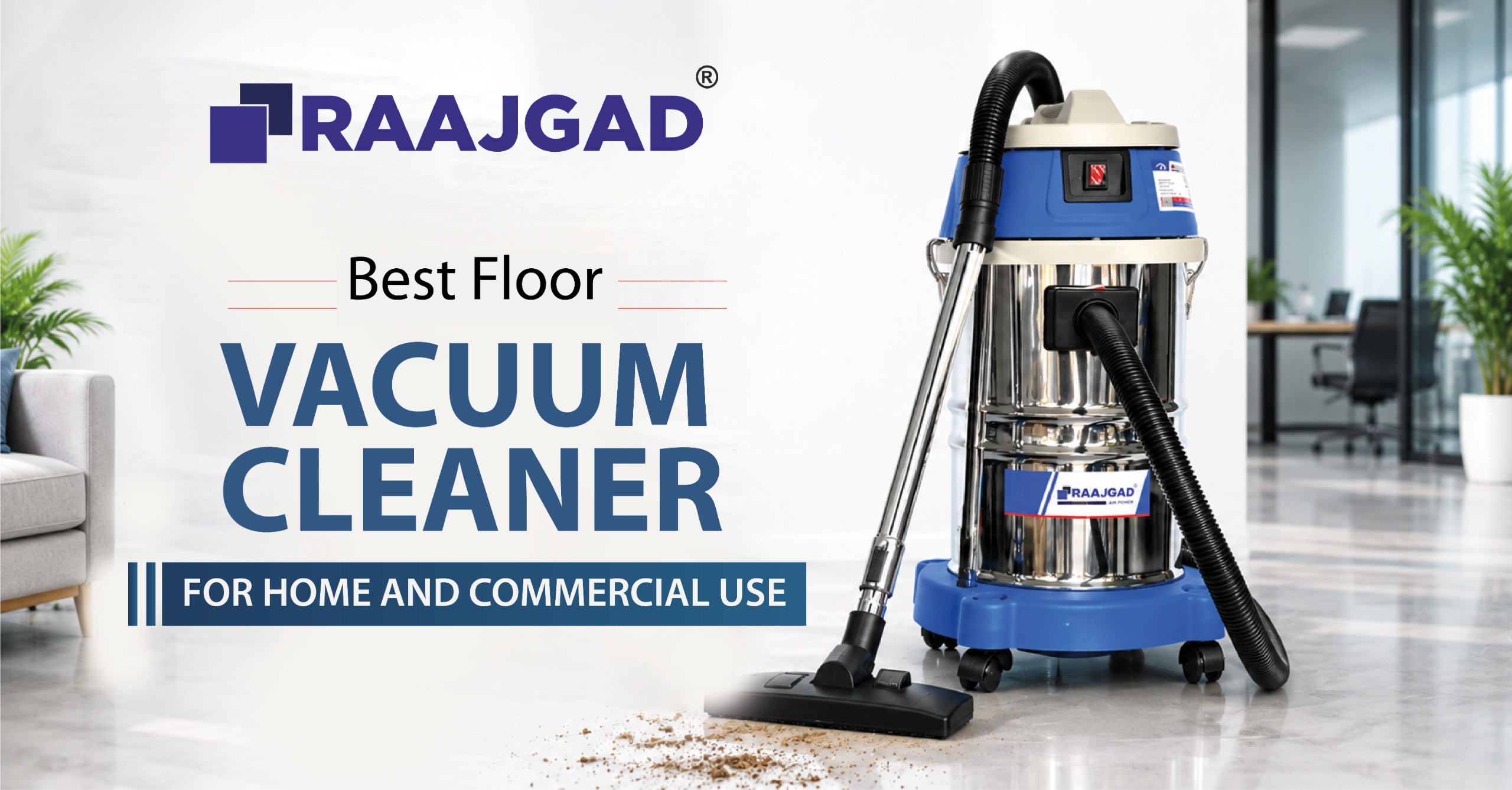
A good vacuum cleaner is designed to collect dust and debris efficiently while reducing the effort required for regular floor cleaning. Depending on the model, it can also handle different types of surfaces and, in the case of wet and dry machines, liquid spills as well.
However, choosing the right machine is not simply about buying the vacuum cleaner with the highest motor power. The right choice depends on where you will use it, the type of dirt you need to remove, the size of the cleaning area, and how frequently the machine will be used.
In this guide, we will look at what makes a good floor vacuum cleaner and how to choose one for both home and commercial use.
What Is a Floor Vacuum Cleaner?
A floor vacuum cleaner is a cleaning machine designed primarily for removing dust, dirt, hair, small particles and other debris from floor surfaces.
Unlike a conventional broom, a vacuum cleaner uses suction to collect dirt into a dust container or collection bag. This makes floor cleaning more convenient and can be particularly useful in areas where dust accumulates quickly.
Modern vacuum cleaners are available in different designs and capacities. Some are compact and intended for homes, while larger commercial vacuum cleaners are built for frequent and more demanding cleaning.
For businesses and industrial environments, a wet and dry vacuum cleaner can be particularly useful because it can handle both dry dirt and certain liquid spills, depending on the machine’s design and specifications.
Why Use a Vacuum Cleaner for Floor Cleaning?
One of the biggest advantages of using a vacuum cleaner is convenience.
Instead of repeatedly sweeping the same area, you can move the vacuum across the floor and collect dirt directly into the machine. This can be especially useful when cleaning large areas.
Here are some common reasons people choose vacuum cleaners for floor cleaning:
- Faster cleaning of larger areas
- Easy removal of dust and loose dirt
- Useful for corners and difficult-to-reach areas
- Better control over collected dust
- Suitable for regular home cleaning
- Commercial models can handle frequent cleaning
- Different attachments can be used for different surfaces
- Wet and dry models can provide additional cleaning flexibility
The actual performance will depend on the machine, accessories, floor surface and type of dirt being cleaned.
Best Floor Vacuum Cleaner for Home Use
For a home, the ideal vacuum cleaner does not necessarily need to be a large commercial machine.
If you mainly clean bedrooms, living rooms, hallways, kitchens and other household areas, look for a machine that is easy to move and store.
A compact vacuum cleaner with good suction power can be sufficient for regular household dust and debris. If your home has carpets, rugs, wooden flooring or tiled surfaces, check whether the machine includes suitable floor brushes or accessories.
For homes with children or pets, cleaning requirements can be different. Hair, food particles and fine dust may accumulate more frequently, making regular vacuuming useful.
Before buying a vacuum cleaner for your home, consider:
1. Suction Performance
Suction is one of the most important aspects of a vacuum cleaner. A machine needs sufficient suction to pick up dust, dirt and debris effectively from the intended surface.
However, motor wattage alone should not be the only factor you consider. Look at the overall design, airflow, filtration, accessories and intended application.
2. Size and Weight
A vacuum cleaner used several times a week should be comfortable to move around the house.
A very large machine may offer greater capacity, but it can be inconvenient if you need to carry it between floors or store it in a small space.
3. Dust Collection Capacity
If the dust container is very small, you may need to empty it frequently.
For larger homes or households that require frequent cleaning, a bigger collection capacity can reduce interruptions during cleaning.
4. Accessories
Different floor surfaces may require different cleaning heads or attachments.
A machine with useful accessories can make it easier to clean floors, corners, furniture, stairs and other areas.
Best Floor Vacuum Cleaner for Commercial Use
Commercial cleaning is different from household cleaning.
Offices, hotels, restaurants, workshops, retail stores, schools and other commercial spaces may have larger floor areas and higher cleaning requirements.
In such situations, a commercial vacuum cleaner should be selected based on the workload rather than appearance or motor power alone.
For example, a machine used for occasional office cleaning may have completely different requirements from one used several hours a day in a workshop.
Commercial users should consider:
- Cleaning area
- Frequency of operation
- Type of dirt
- Dry or wet cleaning requirements
- Collection tank capacity
- Hose and cable length
- Available accessories
- Filtration system
- Ease of maintenance
- Availability of service and spare parts
If the cleaning environment involves both dust and liquid spills, a wet and dry vacuum cleaner can be a practical option.
Wet and Dry Vacuum Cleaner for Floor Cleaning
A wet and dry vacuum cleaner is designed for applications where both dry debris and liquid cleaning may be involved.
For example, commercial premises may have dust and dirt on the floor during normal operation and occasional water or other non-hazardous liquid spills.
Instead of maintaining separate equipment for every situation, a suitable wet and dry vacuum can provide greater flexibility.
These machines are commonly considered for:
- Workshops
- Garages
- Commercial establishments
- Hotels
- Offices
- Warehouses
- Car cleaning centres
- Industrial cleaning applications
- Large residential properties
Before using a wet and dry vacuum, always check the manufacturer’s instructions. Not every liquid is suitable for every vacuum cleaner, and electrical equipment should never be used for liquids or environments outside its specified application.
How to Choose the Right Floor Vacuum Cleaner
There is no single vacuum cleaner that is perfect for every user.
The best floor vacuum cleaner depends on the cleaning requirement.
For Small Homes
A compact machine with good suction, easy handling and simple maintenance may be sufficient.
For Large Homes
Consider a vacuum with a larger dust collection capacity and accessories suitable for multiple floor surfaces.
For Offices
Look for a reliable machine that can be used regularly without becoming difficult to operate or maintain.
For Workshops and Garages
A more robust vacuum may be required because the machine could encounter larger amounts of dust, dirt and debris. If liquid spills are also common, consider a suitable wet and dry model.
For Commercial Cleaning
For hotels, shops, institutions and other commercial areas, pay attention to tank capacity, operating time, mobility, filtration, accessories and service support.
Floor Vacuum Cleaner vs Traditional Sweeping
Traditional sweeping is still useful for many situations, but vacuum cleaning offers several advantages.
A broom moves dust and debris from one place to another before it is collected. A vacuum cleaner, on the other hand, is designed to collect the debris directly into its collection system.
This can make vacuum cleaning particularly convenient for enclosed spaces where dust control is important.
It is also easier to use a vacuum cleaner around furniture, corners and certain difficult-to-reach areas when the appropriate attachment is available.
That does not mean a vacuum cleaner completely replaces every traditional cleaning method. Different cleaning tools have different purposes, and the best cleaning setup depends on the environment.
Important Features to Check Before Buying
Before purchasing a floor vacuum cleaner, take a few minutes to compare the specifications.
Motor and Suction
Check the manufacturer’s specifications for the intended application rather than choosing a machine based only on a high wattage number.
Tank or Dust Capacity
A larger capacity can be useful when cleaning large areas because the machine may require less frequent emptying.
Filtration
The filtration system plays an important role in how the machine manages collected dust. Choose a suitable filtration system according to the cleaning environment.
Construction Quality
Commercial machines may be used much more frequently than household machines. Therefore, build quality and component durability become important considerations.
Mobility
Wheels, handles, hose design and overall machine weight can have a significant impact on everyday usability.
Service Support
This is often overlooked.
A vacuum cleaner is a machine with moving and electrical components, so maintenance and service availability should be considered before purchase, especially for commercial users.
How to Maintain a Floor Vacuum Cleaner
Even a powerful vacuum cleaner requires regular maintenance.
Empty the dust container or collection tank when required and clean the filters according to the manufacturer’s instructions. Check the hose and accessories regularly for blockages.
If the machine shows unusual noise, reduced suction, overheating or other performance issues, stop using it and have it inspected.
Regular maintenance can help keep the machine working properly and may reduce unnecessary wear.
Final Thoughts
Choosing the best floor vacuum cleaner depends on how and where you plan to use it.
For a home, convenience, size, suction performance and easy maintenance may be the most important considerations. For commercial environments, durability, capacity, operating requirements, accessories and service support become much more important.
If you need to clean only normal household dust, a compact vacuum cleaner may be enough. If you are dealing with larger areas, heavy dirt or occasional liquid spills, a commercial or wet and dry vacuum cleaner may be more suitable.
The important thing is to select the machine according to your actual cleaning requirement instead of choosing purely on motor power or price.
A properly selected vacuum cleaner can make routine floor cleaning faster, easier and more manageable—whether you are cleaning your home every day or maintaining a busy commercial space.
Frequently Asked Questions
Which vacuum cleaner is best for floor cleaning?
The best vacuum cleaner depends on the floor type, cleaning area and type of dirt. For normal household cleaning, a compact vacuum can be suitable, while larger commercial areas may require a higher-capacity commercial machine.
Is a wet and dry vacuum cleaner good for floors?
Yes, a suitable wet and dry vacuum cleaner can be useful for floor cleaning when both dry dirt and liquid spills are part of the cleaning requirement. Always follow the manufacturer’s operating instructions.
Can I use a commercial vacuum cleaner at home?
Yes, a commercial vacuum cleaner can be used at home if its size, power, noise level and features are appropriate for the household. However, a commercial machine may be larger than necessary for a small home.
How often should I clean my vacuum cleaner?
The dust container or collection tank should be emptied as required, while filters and other components should be cleaned according to the manufacturer’s recommendations and frequency of use.
What should I check before buying a floor vacuum cleaner?
Check suction performance, capacity, filtration, accessories, construction quality, mobility, maintenance requirements and after-sales service. Most importantly, choose a machine designed for your intended application.
Dattatray Daswadkar
Director, Sales & Marketing - Raajgad Techno Services Pvt. Ltd. Dattatray Daswadkar leads the Sales & Marketing operations at Raajgad Techno Services Pvt. Ltd., playing a key role in building the company’s strong presence across the pump industry. With deep expertise in customer relations and technical solutions, he has helped position Raajgad Techno as a trusted partner for major municipal and industrial clients. Under his leadership, the company is expanding rapidly across India — introducing new models, advanced features, and placing greater emphasis on after-sales support. As BIS norms evolve, Dattatray ensures that Raajgad stays ahead by aligning all products with upcoming standards and certifications.